Skip to content
Free Shipping on US Orders $99 and Above!
Free Shipping on US Orders $99+!

Country

Rudraksha Beads

Rudraksha Beads

Rudraksha beads are the dried seeds of the Elaeocarpus ganitrus tree, traditionally strung into prayer malas and worn in Hindu and Buddhist practice for their spiritual and symbolic significance.

MaterialNatural seed (Elaeocarpus ganitrus)
OriginSouth & Southeast Asia
TechniqueNaturally formed seed
Typical size6–25 mm
EraTraditional & contemporary
ColorsNatural brown
Shop all Rudraksha Beads

What are Rudraksha Beads?

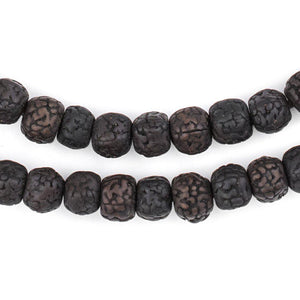
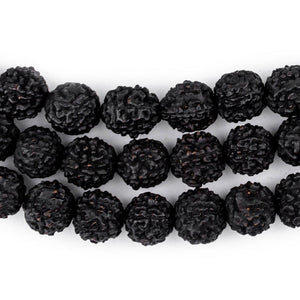
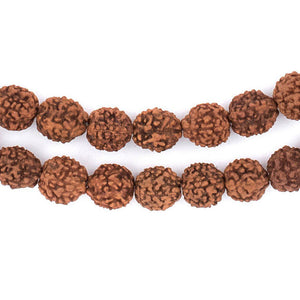
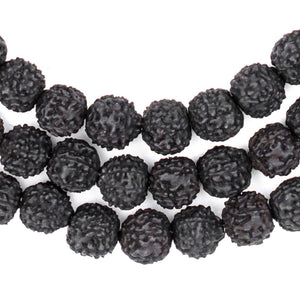
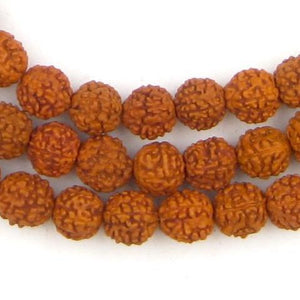
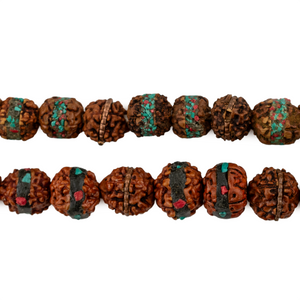
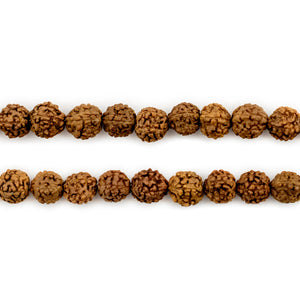
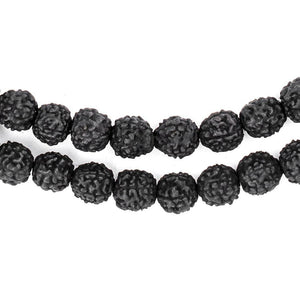
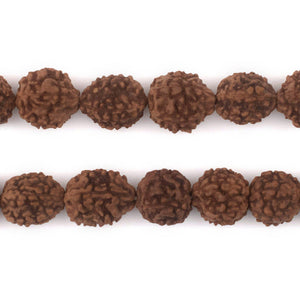
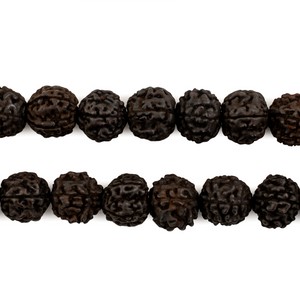
Rudraksha beads are not manufactured — they are the seeds of the rudraksha tree (Elaeocarpus ganitrus), which grows across South and Southeast Asia. Each seed has a naturally ridged, furrowed surface and a hole that allows it to be strung without drilling.

The seeds are distinguished by their “mukhi” (faces) — the natural vertical clefts running across the bead. Five-faced (panch mukhi) rudraksha are the most common; beads with fewer or more faces are rarer and especially prized.

How Rudraksha Beads are made

Rudraksha Beads
  1. Ripe rudraksha fruit is harvested from the Elaeocarpus ganitrus tree.
  2. The blue outer fruit is removed to reveal the hard seed inside.
  3. The seeds are cleaned and dried, which brings out their deep brown color and ridged surface.
  4. Each seed is sorted by size and by its number of mukhi (faces).
  5. The natural hole is cleared so the bead can be strung — no drilling required.

History & cultural significance

Rudraksha Beads
Rudraksha have been worn for thousands of years in Hindu and Buddhist traditions. The name is often associated with Lord Shiva, and the beads are traditionally strung into malas of 108 beads used for meditation and the repetition of mantras. Beyond their spiritual role, they have long been worn as everyday adornment and protective talismans.

Where Rudraksha Beads come from

Rudraksha trees grow across South and Southeast Asia. Most beads come from India, Nepal, and Indonesia, with high-altitude Nepali seeds especially prized. The beads have been central to Hindu and Buddhist practice in this region for thousands of years.
Map highlighting South & Southeast Asia (India, Nepal, Indonesia)
South & Southeast Asia (India, Nepal, Indonesia)

How to identify Rudraksha Beads

  • A hard, woody seed with deep natural ridges and furrows — no two are identical.
  • Visible vertical “mukhi” lines (faces) running pole to pole; count them to identify the type.
  • A natural through-hole, unlike drilled stone or glass beads.
  • Genuine seeds have organic irregularity; perfectly uniform, seamless beads may be imitations.

How they're used

  • Prayer and meditation malas, traditionally 108 beads plus a guru bead.
  • Necklaces and wrist malas worn daily.
  • Layered and statement jewelry paired with metal, bone, or gemstone beads.
  • Yoga and mindfulness practice.

Value & collectibility

Common five-faced rudraksha are inexpensive and widely available. Rare mukhi counts (one-faced, and high counts like fourteen-faced) and certified Nepali beads can be highly valuable and collectible.

Shop Rudraksha Beads

Shop all Rudraksha Beads →

Frequently asked questions

What are rudraksha beads?
The naturally ridged seeds of the Elaeocarpus ganitrus tree, used in prayer malas and worn for spiritual significance.
What does mukhi mean?
Mukhi means “face” — the natural vertical clefts on a rudraksha bead. Five-faced (panch mukhi) is the most common.
Are rudraksha beads natural?
Yes, they are real tree seeds, not manufactured beads.
How many beads are in a rudraksha mala?
Traditionally 108 beads plus a guru (head) bead.
Where do rudraksha beads come from?
Primarily India, Nepal, and Indonesia.

Related beads

References & further reading

  • The Shiva Purana — traditional scripture on the origin and significance of rudraksha
  • Eleanor Wiley & Maggie Oman Shannon, “A String and a Prayer: How to Make and Use Prayer Beads”
  • Lois Sherr Dubin, “The History of Beads: From 100,000 B.C. to the Present”