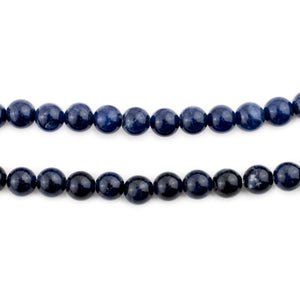
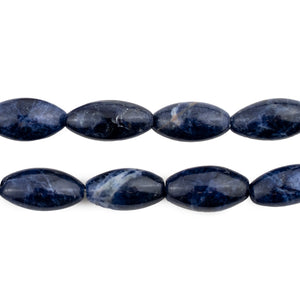
Sodalite beads are cut from sodalite, a rich royal-blue silicate mineral (Mohs hardness about 5.5–6) usually mottled with white veining and occasional grey. It resembles lapis lazuli but is more uniformly blue, lacks lapis's golden pyrite flecks, and is more affordable. Its deep blue makes it a popular stone for calming, statement jewelry.
Types of Sodalite Beads
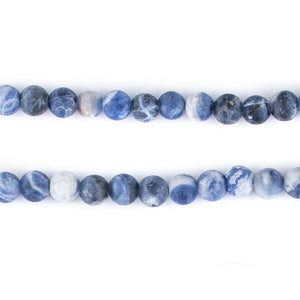
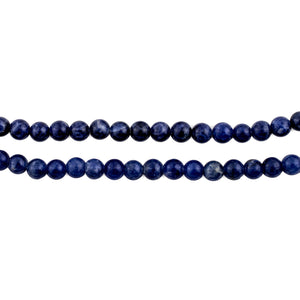
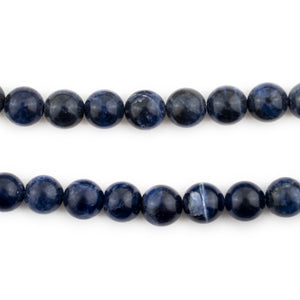
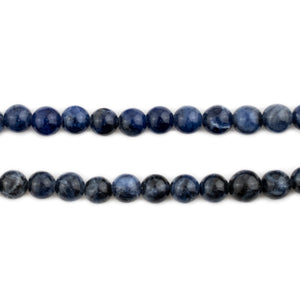
Royal blue sodalite with white veining — the classic.
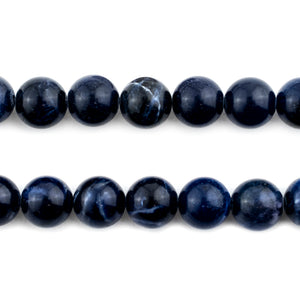
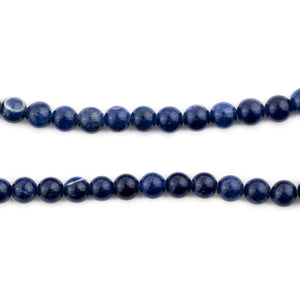
Denser, darker blue sodalite.
Hackmanite — a sodalite variety that can change color in sunlight.
Often confused with lapis lazuli, which has gold pyrite flecks.
Sodalite Beads meaning & symbolism
Sodalite is known as a 'stone of insight and communication,' associated with calm, clear thinking, intuition, and confident self-expression.
History & cultural significance
Sodalite was named in 1811 for its sodium content and gained popularity after large deposits were found in Ontario, Canada — it was even nicknamed 'Princess Blue' after Princess Patricia of Connaught chose it for decoration.
Where Sodalite Beads come from
Sodalite is mined in Brazil, Afghanistan, Canada (Ontario), and Namibia, among other sources.
●Brazil, Afghanistan & Canada
How to identify Sodalite Beads
Sodalite is a fairly even royal blue with white veining and no gold flecks — gold pyrite flecks distinguish lapis lazuli from sodalite.
Genuine stone feels cool and shows natural white marbling.
Very uniform, glassy blue beads may be dyed or imitation.
It is softer than quartz.
How they're used
Bracelets and necklaces.
Calming and communication-themed jewelry.
A lapis lazuli alternative.
Jewelry-making and design.
Buying guide
Sodalite is affordable and a great lapis alternative — look for a deep, even blue with attractive white veining. Matte sodalite is also popular. Choose size and shape and buy by the strand.