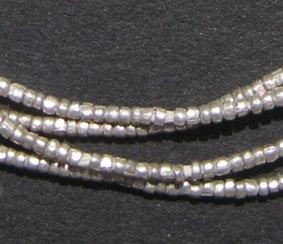
Silver beads range from sterling and silver-plated to 'silver color' German-silver and Ethiopian white-metal beads — a timeless, versatile metal for jewelry.
Silver beads cover a range of silver-toned metals. True silver (sterling, .925) is a precious metal, while most affordable 'silver' beads are silver-plated, German silver (a nickel alloy, also called nickel silver), or 'white metal' — all giving the same bright, cool, classic look. Across Ethiopia and Morocco, white-metal and silver beads are a centerpiece of traditional jewelry.
Types of Silver Beads
Sterling silver (.925) — precious-metal beads.
Silver-plated beads — affordable bright silver.
German / nickel silver — durable silver-tone alloy.
Ethiopian white-metal beads — traditional tribal silver.
Antiqued and oxidized silver.
Silver Beads meaning & symbolism
Silver is associated with the moon, intuition, calm, and protection, and has been worn as a precious and protective metal across cultures for thousands of years.
History & cultural significance
Silver has adorned jewelry for millennia, prized across the ancient world and central to the silver traditions of North and East Africa, the Middle East, and India. Ethiopian and Tuareg silver remain especially renowned.
Where Silver Beads come from
Silver and silver-tone beads come from India, Ethiopia, Morocco, and beyond, with rich traditional silverwork across North and East Africa.
●India, Ethiopia & Morocco
How to identify Silver Beads
Sterling silver is stamped .925 and is a precious metal; most affordable 'silver' beads are plated or silver-tone alloys.
All give a bright, cool silver look.
German silver contains no actual silver — it's a nickel alloy.
Reputable sellers state whether beads are sterling, plated, or silver-colored.
How they're used
Classic and tribal jewelry.
Spacers, findings, and accents.
Ethiopian and Moroccan styles.
Jewelry-making and design.
Buying guide
Decide what you need: precious sterling silver (stamped .925) for fine jewelry, or affordable silver-plated and silver-color alloy beads for everyday and tribal styles. Ethiopian white-metal beads add traditional character. Buy by the piece or strand.
Care & stringing
Silver and silver-tone metals tarnish — polish with a silver cloth, keep dry, and store airtight; note that German/nickel silver may affect those with nickel sensitivities.