Skip to content
Free Shipping on US Orders $99 and Above!
Free Shipping on US Orders $99+!

Country

Heishi Beads

Heishi Beads

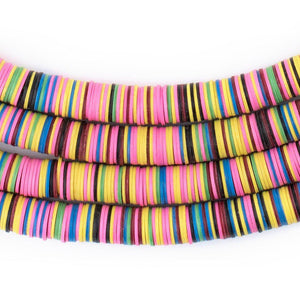
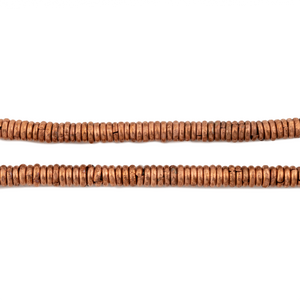
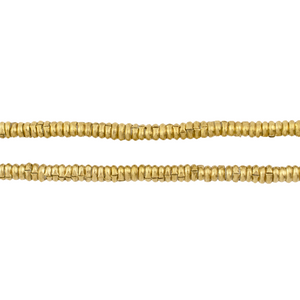
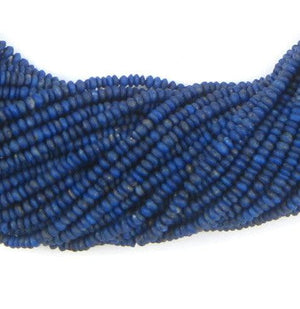
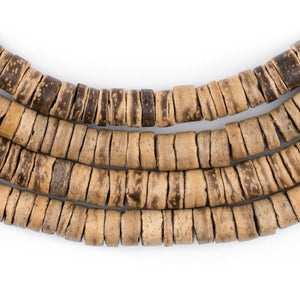
Heishi beads are small, flat disc- or tube-shaped beads — traditionally hand-cut and polished from shell or stone — prized for the smooth, continuous, almost liquid look they create when strung together.

MaterialShell, stone, clay, or metal
OriginSouthwestern U.S. (Pueblo); now worldwide
TechniqueCut & polished discs
Typical size2–6 mm
EraTraditional & contemporary
ColorsNatural, white, black, multicolor
Shop all Heishi Beads

What are Heishi Beads?

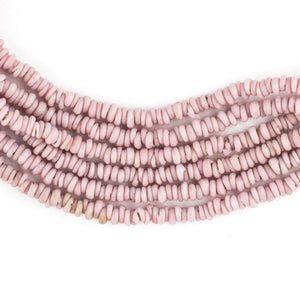
Heishi (pronounced “hee-shee”) are among the oldest forms of beads in North America. The word comes from the Kewa (Santo Domingo) Pueblo language and originally referred to shell beads. Each bead is a small flat disc; strung together, hundreds of them form a smooth, flexible strand that drapes like a single continuous piece.

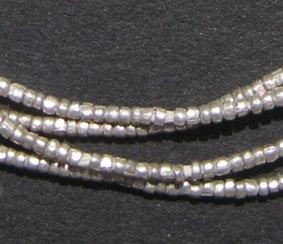
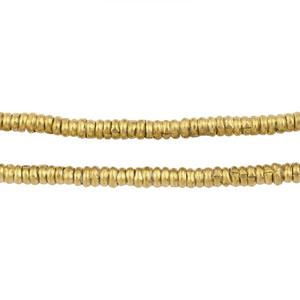
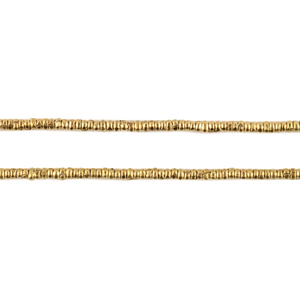
Traditionally heishi were hand-cut from shell or stone, drilled, strung, and then ground and polished as a strand until uniform. Today they are made from shell, turquoise and other stones, clay, and metal, but the hallmark remains the same: tiny, even discs with a fluid finish.

How Heishi Beads are made

Heishi Beads
  1. Small blanks are cut from shell, stone, or clay.
  2. Each blank is drilled through the center.
  3. The drilled pieces are strung together onto a strand.
  4. The whole strand is ground and polished against a stone or wheel until every bead is uniform and smooth.
  5. The finished strand drapes as one continuous, fluid piece.

History & cultural significance

Heishi Beads
Heishi-making is a centuries-old tradition of the Pueblo peoples of New Mexico, especially the Kewa (Santo Domingo) Pueblo, who remain renowned for it. Long before metal tools, artisans shaped and polished shell by hand into beads that were used for adornment and trade across the Southwest. The craft is still passed down through families today.

Where Heishi Beads come from

The heishi tradition originates with the Pueblo peoples of the southwestern United States — especially Santo Domingo (Kewa) Pueblo in New Mexico — who have shaped shell and stone into beads for centuries. Today heishi are made worldwide, but the technique traces back to this region.
Map highlighting Southwestern United States (Pueblo peoples); now made worldwide
Southwestern United States (Pueblo peoples); now made worldwide

How to identify Heishi Beads

  • Very small, uniform disc shape with a smooth, rounded edge profile.
  • A continuous, fluid drape when strung — individual beads nearly disappear into the strand.
  • Hand-cut natural heishi show subtle variation in thickness; machine-made versions are perfectly uniform.
  • Genuine shell and stone heishi feel cool and substantial versus lightweight plastic imitations.

How they're used

  • Necklaces and multi-strand chokers with a smooth, flowing look.
  • Stretch and beaded bracelets, including modern clay-heishi styles.
  • Accents and spacers between larger feature beads.
  • Earrings and anklets.

Value & collectibility

Everyday clay and shell heishi are very affordable. Value rises sharply for finely hand-cut natural heishi — especially genuine turquoise or fine shell from Pueblo artisans — where evenness and craftsmanship command a premium.

Shop Heishi Beads

Shop all Heishi Beads →

Frequently asked questions

What are heishi beads?
Small flat disc-shaped beads, traditionally hand-cut and polished from shell or stone, that form a smooth continuous strand.
How do you pronounce heishi?
It is pronounced “hee-shee.”
What are heishi beads made of?
Traditionally shell or stone; today also clay, turquoise, and metal.
Where do heishi beads come from?
The craft originates with the Pueblo peoples of the southwestern United States, especially Santo Domingo (Kewa) Pueblo.
What are heishi beads used for?
Necklaces, bracelets, anklets, and as spacers in jewelry making.

Related beads

References & further reading

  • Lois Sherr Dubin, “Totems to Turquoise: Native North American Jewelry Arts”
  • Lois Sherr Dubin, “The History of Beads: From 100,000 B.C. to the Present”
  • Smithsonian National Museum of the American Indian — collections of Pueblo shell and turquoise jewelry