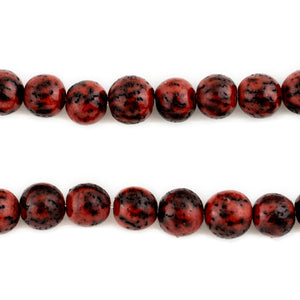
Polymer clay beads are made from polymer clay, a soft, pliable modeling material based on PVC that stays workable until it is baked in a normal home oven, where it hardens permanently. Because the raw clay can be colored in any shade and layered into 'canes,' artists slice cross-sections to reveal repeating flowers, stripes, and millefiori patterns — making polymer clay one of the most versatile and colorful of all modern bead materials. Finished beads are lightweight, durable, and waterproof once cured.
Types of Polymer Clay Beads
Millefiori / cane-worked beads with floral or geometric patterns.
Solid bright-colored beads.
Marbled and faux-stone or faux-metal effects.
Textured, sculpted, and faux-ceramic designs.
Polymer Clay Beads meaning & symbolism
Polymer clay carries no traditional lore; instead it is associated with creativity, handmade artistry, and self-expression, prized for letting makers design endlessly original color combinations and patterns.
History & cultural significance
Polymer clay was first developed in Germany in the 1930s and popularized after the 1960s under brand names such as Fimo and, in the United States, Sculpey. Originally a doll-making and craft material, it became a favorite of bead and jewelry artists in the late 20th century, who borrowed the millefiori caning techniques of Venetian glassmakers to create intricate patterned beads.
Where Polymer Clay Beads come from
Polymer clay was developed in Germany and the United States and is now made and worked into beads by artisans worldwide.
●Germany, USA & worldwide
How to identify Polymer Clay Beads
Polymer clay is very lightweight compared with glass or stone beads of the same size.
Cane and millefiori patterns run all the way through the bead rather than sitting only on the surface.
Cured clay has a slightly matte or satin finish unless glazed, and a faint give when pressed with a fingernail on thicker pieces.
Colors are perfectly even and can be far brighter than natural materials.
How they're used
Colorful statement and artisan jewelry.
Lightweight earrings and long necklaces.
Patterned focal and feature beads.
Mixed-media and craft projects.
Buying guide
Choose polymer clay beads for vivid color and pattern at a light weight and friendly price. Look for smooth, fully cured beads with clean holes and crisp cane patterns; well-made artisan beads are sealed or buffed to a soft sheen. Sizes range widely, so pick a scale that suits the design and buy by the bead or set.
Care & stringing
Cured polymer clay is durable and water-resistant, but it can scratch or dent and may soften in extreme heat, so keep beads out of direct sun and away from solvents, perfumes, and alcohol-based cleaners. Wipe with a soft, slightly damp cloth and store separately to protect any glazed surfaces.
Yes — once baked they are hard, lightweight and water-resistant, though they can scratch or dent and should be kept away from high heat.
What are the colorful patterns in polymer clay beads?
They are usually millefiori or cane patterns, made by layering colored clay into a log and slicing cross-sections that show flowers or geometric designs.
Is polymer clay the same as air-dry clay?
No — polymer clay is a PVC-based compound that must be baked to harden, while air-dry clay sets by drying and is more fragile.
Can polymer clay beads get wet?
Briefly, yes; cured clay is water-resistant, but avoid prolonged soaking and harsh chemicals that can dull the surface.
Why are polymer clay beads so popular for earrings?
They are extremely lightweight and come in endless colors and shapes, making them comfortable and easy to design with.