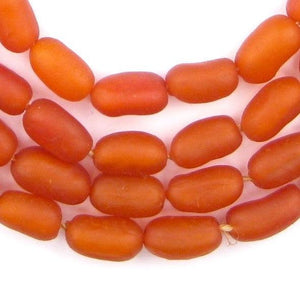
Amber beads are made from amber — fossilized tree resin — and from African and Moroccan resin 'amber,' prized for warm golden tones and a light, glowing feel.
Amber beads are made from amber — true amber is fossilized tree resin, millions of years old, warm and light with a golden glow. Much 'amber' in African and Moroccan jewelry is actually copal (young resin) or reconstituted resin amber, valued for its large size, warm color, and the dramatic look of traditional Berber and Fulani necklaces. Genuine Baltic amber is the prized fossilized type.
Types of Amber Beads
Baltic amber — true fossilized resin, honey to cognac tones.
African amber (copal / resin) — large warm beads in traditional jewelry.
Amber is associated with warmth, healing, protection, and vitality, and has been worn as a protective amulet — especially for children — for thousands of years.
History & cultural significance
Amber has been treasured since the Stone Age, traded along ancient 'Amber Roads' across Europe, and prized in African and Berber adornment, where large amber and resin beads signal status and wealth.
Where Amber Beads come from
True amber comes mainly from the Baltic region; the large resin 'amber' beads in African and Moroccan jewelry come from West and North Africa.
●Baltic, Africa & Morocco
How to identify Amber Beads
Genuine amber is very lightweight and warm to the touch, sometimes with tiny natural inclusions.
It can carry a faint resinous scent when warmed.
Much African and Moroccan 'amber' is copal or resin — affordable and valued in its own right.
Heavy, cold 'amber' is likely glass or plastic.
How they're used
Statement and tribal necklaces.
Berber and Fulani-style jewelry.
Protective and heirloom pieces.
Jewelry-making and collecting.
Buying guide
Decide between genuine Baltic amber (fossilized, prized) and African or Moroccan resin amber (large, warm, affordable, traditional). Real amber is very light and warm. Buy by the piece or strand, and look for sellers who state whether it's amber, copal, or resin.
Care & stringing
Amber is soft and warm — keep it away from heat, solvents, and perfume, wipe gently with a soft cloth, and store it separately from harder beads.